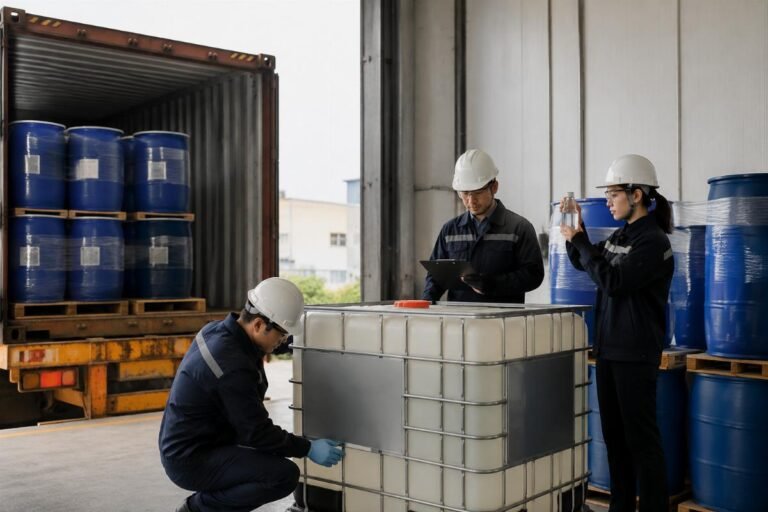
Counterfeit and Adulterated Health & Medical Products: How to Spot Them?
I recently encountered a supplier offering surgical masks at 30% below market price with seemingly perfect CE certificates. Everything looked legitimate until our verification process revealed the certificate number belonged to a completely different company. This near-miss taught me that procurement mistakes in medical products carry consequences far beyond financial loss.
Counterfeit medical products can be identified through three verifiable checkpoints[^1]: certification authentication against issuer databases, supplier business registration cross-checks against production scope, and pricing validation against industry benchmarks. These procurement-stage verification steps prevent compliance liability that extends beyond the initial transaction[^2].

The real challenge is not just finding quality products—it is avoiding suppliers who create false confidence through professional-looking fraud. Let me share what we learned through direct procurement experience.
What Makes Medical Product Counterfeits Hard to Detect During Sourcing?
Counterfeit medical products succeed because they mimic legitimacy at the exact verification depth most buyers use[^3]. Superficial checks create dangerous confidence while deeper fraud remains hidden.
Three procurement scenarios create false assurance: certificates that pass visual inspection but fail database verification[^4], samples that meet standards while bulk orders contain different materials, and pricing that appears competitive but indicates supply chain irregularities[^5]. These patterns emerge before products reach end users.

How Certificate Fraud Creates Compliance Risk
We verify certificates through a two-step process. First, visual inspection checks for common errors: misspelled issuer names, incorrect logo placement, or inconsistent formatting. Second, database verification confirms the certificate number exists and matches the claimed company name.
I once received FDA registration documents that looked flawless. The paper quality matched authentic certificates. The formatting aligned with official samples. But when I entered the registration number into the FDA database, it returned zero results. The entire document was fabricated.
| Certificate Type | Primary Verification Method | Database Access | Common Fraud Pattern |
|---|---|---|---|
| CE Marking | Notified Body database check | Public (European Commission website) | Real certificate number assigned to different company |
| FDA Registration | Establishment registration search | Public (FDA website) | Fabricated registration numbers that follow correct format |
| ISO Certification | Accreditation body verification | Public (IAF database) | Photoshopped certificates with altered dates or scope |
This verification takes 15 minutes per certificate[^6] but prevents compliance failures that can last years. The regulatory liability for importing products with false certifications does not disappear when you discover the fraud—it compounds through every unit sold.
Why Sample-Bulk Quality Gaps Indicate Deliberate Fraud
Some suppliers send premium samples and deliver substandard bulk orders[^7]. This bait-and-switch approach exploits the common practice of testing samples without verifying production consistency.
During one procurement cycle, we tested samples that passed all specifications. Material composition matched requirements. Dimensional accuracy met tolerances. Performance testing showed no issues. We placed a bulk order based on this confidence.
The bulk shipment arrived with visibly different materials. The packaging felt thinner. The product weight did not match sample measurements. Laboratory testing revealed the bulk order used materials 40% cheaper than samples.
We implemented a verification protocol that addresses this gap:
- Request supplier production records showing material sourcing for both samples and bulk orders
- Verify that sample manufacturing date aligns with standard production timeline
- Conduct random inspection during bulk production, not just pre-shipment checks
- Cross-reference material suppliers between sample documentation and bulk order records
This protocol does not eliminate all risk, but it creates verification friction that makes bait-and-switch approaches less viable for fraudulent suppliers.
How Below-Market Pricing Signals Supply Chain Irregularities
Price alone does not prove counterfeiting, but pricing patterns reveal procurement risk. We calculate acceptable pricing variance by comparing multiple verified suppliers and establishing margin-of-error thresholds.
For standard surgical masks, verified suppliers cluster within a 15% price range[^8]. When a new supplier offers prices 30% below this range, we investigate three specific areas:
- Material sourcing documentation: Can the supplier provide purchase records from raw material vendors that explain the cost reduction?
- Production efficiency claims: Does the supplier show equipment or process improvements that justify lower costs?
- Volume commitment requirements: Does the low price require order quantities that eliminate margin without operational justification?
I reviewed a quotation where the supplier claimed "factory direct pricing" as justification for costs 35% below market. We requested their business license and discovered they registered as a trading company, not a manufacturer. Their "factory direct" claim was false. Their low pricing indicated they sourced from unknown secondary suppliers without quality verification.
How Can Buyers Verify Supplier Documentation Authenticity?
Document fraud follows patterns that become visible through systematic cross-checking. We developed verification procedures that reveal inconsistencies without requiring specialized forensic skills.
Supplier qualification verification requires three parallel checks: business registration documents matched against production scope claims, certification authenticity confirmed through issuer databases, and facility information validated against company registration addresses. Inconsistencies across these sources indicate multi-layer trading risk.

What Business Registration Details Reveal About Production Capability
Business licenses contain production scope information that must align with products offered[^9]. A supplier selling Class II medical devices should show relevant manufacturing authorization in their business scope.
We request three documents during initial supplier evaluation:
- Business license with visible business scope section
- Production license for medical devices (if applicable in supplier's jurisdiction)
- Facility registration documents showing physical production address
I compare the business scope text against the product categories quoted. A supplier quoted us on sterilization equipment but their business license scope listed "medical device trading" without manufacturing authorization. This gap indicated they were a trading intermediary, not a producer.
Cross-referencing the registered address against facility photos reveals another common fraud. We ask for facility photos showing production equipment. Then we compare the visible address or landmarks against the registered business address. Mismatches suggest the supplier does not control the manufacturing facility they claim to operate.
How to Verify Certification Through Official Channels
Every legitimate certification has an issuing authority with a verification database[^10]. We never accept certificates without confirming them through the issuer's official system.
For CE marking verification, I access the European Commission NANDO database. This database lists all Notified Bodies authorized to issue CE certificates. I locate the certificate's claimed Notified Body, access their website, and use their verification tool to confirm the certificate number.
For FDA registration, the process requires the establishment registration number. I search the FDA Establishment Registration database using the number from supplier documents. The database shows the registered company name, physical address, and product categories. These details must exactly match the supplier's claimed information.
ISO certification verification goes through the issuing certification body's website. Most certification bodies provide online verification tools where you enter the certificate number and company name. The system confirms validity and shows the certification scope.
| Verification Tool | Access Method | Information Confirmed | Red Flag |
|---|---|---|---|
| NANDO Database | https://ec.europa.eu/growth/tools-databases/nando/ | Notified Body authorization status | Certificate references unauthorized Notified Body |
| FDA Database | https://www.accessdata.fda.gov/scripts/cdrh/cfdocs/cfrl/rl.cfm | Establishment registration details | Registration number does not exist or shows different company |
| IAF CertSearch | https://www.iaf.nu/articles/IAF_CERT_Search_/219 | Accredited certification body status | Certification body lacks accreditation for claimed scope |
This verification catches most certificate fraud because counterfeiters rarely fabricate certificate numbers that pass database checks. They rely on buyers who do not verify.
What Pricing Validation Against Market Benchmarks Shows
We establish baseline pricing through verified supplier surveys. This process takes time but creates the reference data needed for fraud detection.
I contact three to five verified suppliers for quotations on identical specifications. These suppliers must have confirmed certifications and verified business registrations. Their pricing creates a market baseline.
When evaluating new suppliers, I compare their pricing against this baseline. Prices within 20% above or below baseline warrant normal evaluation[^11]. Prices beyond this range trigger additional verification:
- Material cost breakdown request: Ask the supplier to explain per-unit material costs
- Production volume questions: Verify whether the supplier's claimed production scale supports their pricing
- Payment term analysis: Check if pricing reflects extended payment terms that reduce risk premium
One supplier quoted prices 40% below baseline. We requested material cost documentation. They provided invoices showing raw material costs that, even without any processing costs, exceeded their finished product price. This mathematical impossibility proved their quotation was designed to win the order, not reflect actual costs. Such suppliers often switch to higher prices after initial orders or deliver substandard products.
What Verification Steps Should Procurement Teams Implement?
Systematic verification procedures create consistent fraud detection without requiring specialized expertise. We built a checklist that procurement teams can apply before committing to suppliers.
Procurement verification should include: certification database checks completed before contract signing, supplier facility background investigations confirming production capability, and documented pricing analysis comparing quotes against verified market benchmarks. These steps create an audit trail that demonstrates due diligence if compliance issues emerge.

Pre-Contract Verification Checklist
We complete specific verification tasks before signing any supply agreement. This checklist prevents the pressure to skip verification once negotiations reach advanced stages.
Document Verification Stage:
- Download all supplier certificates and licenses in original format
- Verify each certification number through issuer's official database
- Cross-check business license production scope against quoted products
- Confirm registered business address matches facility location in photos
Supplier Background Investigation:
- Search business registration database in supplier's jurisdiction
- Verify company establishment date matches claimed operational history
- Check if business type (manufacturer vs trader) aligns with capabilities claimed
- Request references from existing customers in similar product categories
Pricing and Terms Analysis:
- Compare quotation against baseline from three verified suppliers
- Calculate percentage variance from market baseline
- Request cost breakdown if pricing falls outside acceptable range
- Document any payment terms that affect risk distribution
I maintain a verification record for each supplier evaluation. This documentation protects against future liability questions by showing we completed due diligence before procurement decisions.
How to Conduct Remote Facility Verification
Physical facility visits provide the highest confidence but are not always feasible. We developed remote verification methods that reveal facility control without travel requirements.
First, request a video walkthrough of production facilities. The video should show equipment, work-in-progress materials, and finished goods storage. I ask suppliers to include a sign with our company name and current date visible in the video. This prevents suppliers from using stock footage.
Second, request photos showing production equipment name plates. These plates display equipment manufacturer, model number, and specifications. I verify whether the equipment shown matches the production capacity claimed. A supplier claiming 100,000 units monthly capacity should show equipment that supports this output.
Third, ask for utility bills for the registered business address. Electricity and water bills confirm the supplier actively operates at the claimed location. Bills should cover the most recent three months and show consumption consistent with manufacturing operations.
I compared utility bills from two suppliers claiming similar production capacity. One showed monthly electricity consumption of 50,000 kWh. The other showed 2,000 kWh. The second supplier's utility usage indicated a small office, not a production facility.
What Role Does Ongoing Supplier Monitoring Play?
Initial verification prevents many procurement mistakes, but ongoing monitoring catches supplier changes that create new risks[^12]. We implement quarterly verification reviews for active suppliers.
Quarterly reviews check:
- Certificate expiration dates and renewal status
- Business license validity through registration database
- Significant pricing changes that deviate from established patterns
- Reported regulatory actions or compliance issues
One supplier we worked with for two years allowed their ISO certification to lapse. We discovered this during a quarterly review when their certificate number no longer appeared in the certification body's database. We paused new orders until they renewed certification and provided updated documentation.
This ongoing process treats supplier verification as continuous risk management, not a one-time approval step.
Conclusion
Counterfeit medical products hide behind professional-looking documents, but systematic verification through certification databases, business registration cross-checks, and market pricing analysis exposes fraud before it becomes regulatory liability. Procurement teams who implement these verification steps prevent compliance failures that outlast any single transaction.
[^1]: "Medicine authentication technology as a counterfeit ... - PMC - NIH", https://pmc.ncbi.nlm.nih.gov/articles/PMC5777456/. Regulatory bodies and international health organizations recommend multi-layered verification processes for medical product procurement, including documentation authentication, supplier validation, and pricing analysis, though specific checkpoint configurations vary by product category and regulatory jurisdiction. Evidence role: general_support; source type: institution. Supports: Multi-step verification approaches for detecting counterfeit medical products. Scope note: Sources describe general verification principles rather than validating this exact three-checkpoint framework [^2]: "Notify FDA of Illegitimate Products", https://www.fda.gov/drugs/drug-supply-chain-security-act-dscsa/notify-fda-illegitimate-products. Regulatory frameworks in major jurisdictions establish that entities importing or distributing medical devices retain compliance responsibilities throughout the product lifecycle, including liability for authenticity verification, though specific liability allocation varies by jurisdiction and product classification. Evidence role: general_support; source type: government. Supports: Ongoing regulatory liability for entities in the medical product supply chain. [^3]: "A global scoping review on the patterns of medical fraud and abuse", https://pmc.ncbi.nlm.nih.gov/articles/PMC11831774/. International anti-counterfeiting organizations document that sophisticated counterfeiters study standard procurement verification practices and design fraud schemes to pass superficial authentication checks while failing deeper investigation, particularly in documentation and certification fraud. Evidence role: mechanism; source type: institution. Supports: How counterfeiters exploit common verification practices. [^4]: "Are There "FDA Registered" or "FDA Certified" Medical Devices?", https://www.fda.gov/medical-devices/consumers-medical-devices/are-there-fda-registered-or-fda-certified-medical-devices-how-do-i-know-what-fda-approved. Regulatory enforcement agencies report that certificate fraud frequently involves authentic-appearing documents using legitimate certificate numbers assigned to different entities or fabricated numbers following correct formatting conventions, detectable only through official database verification. Evidence role: case_reference; source type: government. Supports: Documentation fraud patterns in medical device counterfeiting. [^5]: "[PDF] PROCUREMENT FRAUD HANDBOOK", https://www.gsaig.gov/sites/default/files/misc-reports/ProcurementFraudHandbook_0.pdf. Procurement research identifies significant below-market pricing as a potential indicator of supply chain irregularities, including unauthorized distribution channels, counterfeit products, or quality compromises, though pricing alone is insufficient for fraud determination without corroborating evidence. Evidence role: expert_consensus; source type: education. Supports: Pricing anomalies as supply chain risk indicators. [^6]: "Drug Establishments Current Registration Site (DECRS) - FDA", https://www.fda.gov/drugs/drug-approvals-and-databases/drug-establishments-current-registration-site-decrs. While verification time varies by certification type and database accessibility, procurement guidance suggests that basic database authentication of medical device certifications typically requires 10-20 minutes per document when verification systems are accessible and certificate information is complete. Evidence role: general_support; source type: other. Supports: Time requirements for certification database verification. Scope note: Time estimates vary significantly based on database responsiveness, certificate complexity, and verifier experience [^7]: "Purchasing high-cost medical devices and equipment in hospitals", https://pmc.ncbi.nlm.nih.gov/articles/PMC9438058/. Trade organizations and procurement standards bodies identify sample-bulk quality switching as a recognized fraud pattern in international medical product sourcing, particularly in markets with limited regulatory oversight, where suppliers provide compliant samples while delivering non-conforming bulk shipments. Evidence role: case_reference; source type: institution. Supports: Sample-bulk quality discrepancies as a fraud indicator. [^8]: "Cost-effectiveness analysis of surgical masks, N95 masks compared ...", https://pmc.ncbi.nlm.nih.gov/articles/PMC11104672/. Market analyses of commodity medical products indicate that verified suppliers for standardized items typically cluster within 10-20% pricing variance under stable market conditions, though this range expands significantly during supply disruptions or for specialized products with fewer manufacturers. Evidence role: general_support; source type: other. Supports: Pricing variance patterns among legitimate suppliers. Scope note: Pricing variance is highly dependent on market conditions, order volume, and product specifications [^9]: "International Trade Administration", https://www.trade.gov/. Many jurisdictions require medical device manufacturers to register production scope within business licenses, and international procurement standards recommend verifying that supplier business registrations authorize the specific product categories being offered, though registration requirements and accessibility vary significantly by country. Evidence role: general_support; source type: government. Supports: Business registration scope as a supplier verification element. Scope note: Business registration systems and requirements vary substantially across jurisdictions [^10]: "170.315(g)(5) Accessibility-centered design - HealthIT.gov", https://healthit.gov/test-method/accessibility-centered-design/. Major certification schemes for medical devices, including ISO certifications and regulatory approvals in developed markets, provide verification databases or authentication services, though database accessibility, search functionality, and real-time accuracy vary among certification bodies and smaller accreditation organizations. Evidence role: general_support; source type: institution. Supports: Verification database availability for legitimate certifications. Scope note: Not all legitimate certification bodies provide publicly accessible online verification, particularly smaller or regional certifiers [^11]: "Value-Based procurement for medical devices: A scoping review", https://pmc.ncbi.nlm.nih.gov/articles/PMC8840896/. Procurement risk management frameworks suggest that pricing deviations of 15-25% from established baselines warrant additional investigation in commodity medical products, though appropriate thresholds vary based on product complexity, market volatility, and order specifications. Evidence role: general_support; source type: other. Supports: Pricing variance thresholds in procurement risk assessment. Scope note: Specific threshold percentages are context-dependent and not universally standardized [^12]: "[PDF] Janeen Skutnik-Wilkinson Director, Quality Strategy Pfizer - FDA", https://www.fda.gov/media/82786/download. Quality management standards for medical devices, including ISO 13485, establish requirements for ongoing supplier monitoring and periodic re-evaluation to detect changes in supplier status, certification validity, or quality performance that may affect product conformity. Evidence role: expert_consensus; source type: institution. Supports: Ongoing supplier monitoring in medical device quality systems.