How Our QC Team Inspects Incoming Additive Shipments
Every peptide manufacturer faces the same dilemma: trust your additive supplier's Certificate of Analysis, or verify it yourself. I manage QC at Ruite Peptide, and I've seen both choices play out. One leads to stability failures six months after shipment. The other catches problems before they touch your production line.
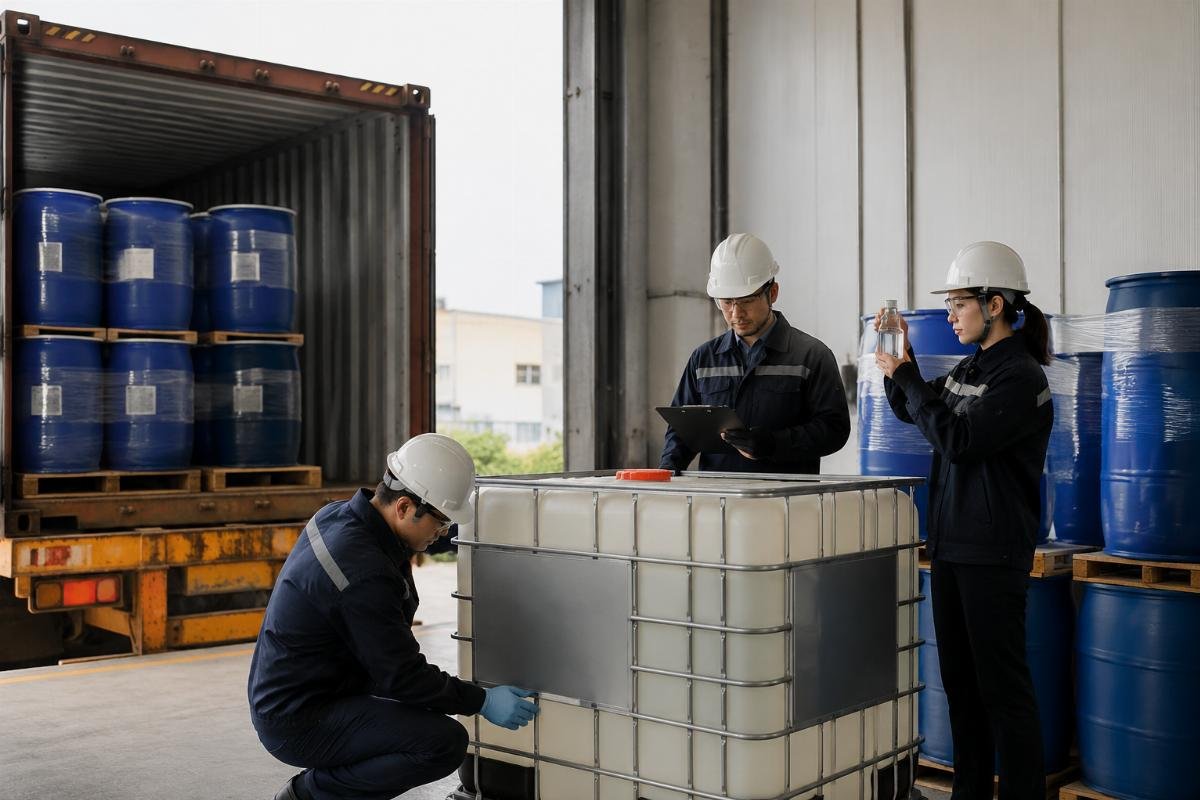
We test every incoming additive shipment with a three-layer protocol: visual inspection for transport damage, in-house HPLC verification of identity and critical impurities, and third-party analysis for trace contaminants our lab cannot detect. This system caught four batches last year that passed supplier COAs but would have compromised final peptide stability.
I learned this the hard way. Three years ago, we accepted a mannitol batch based on the supplier's COA alone. The certificate showed 99.8% purity and passed all moisture limits. Six months later, our tirzepatide batches started showing degradation peaks during stability testing. We traced it back to that mannitol shipment. A re-test revealed 0.3% reducing sugars—within pharmacopeia limits, but enough to trigger Maillard reactions with our peptide's N-terminus under refrigeration[^1]. The supplier's COA wasn't wrong. It just didn't measure what mattered for our specific application.
Why Do Supplier COAs Sometimes Miss Critical Issues?
Most additive suppliers test to general pharmacopeia standards. These standards weren't designed for peptide stability requirements. I've worked with GMP-certified suppliers who produce excellent general-purpose excipients. But peptides are fragile. A mannitol batch that works perfectly in solid oral dosage forms can still cause aggregation in lyophilized peptide cakes.
Supplier COAs tell you what the material was on the day it left their facility. They don't account for storage conditions during transit, cross-contamination in shared warehouses, or moisture pickup from container seal failures. Our incoming inspection catches these post-production changes before they enter our inventory.

The gap between pharmacopeia compliance and peptide-specific fit-for-use creates blind spots. Standard USP tests for mannitol don't measure reducing sugar content below 0.5%[^2]. That threshold protects most drug products. But GLP-1 receptor agonists like semaglutide and tirzepatide degrade rapidly when exposed to even 0.2% reducing sugars during storage[^3]. We set our internal acceptance limit at 0.1% for this reason. This isn't stricter than standards just to be difficult. It's calibrated to the chemistry of the peptides we synthesize.
I also see batch-to-batch variability even within the same supplier. Last year, we received four consecutive shipments of trehalose from a certified European supplier. Their COAs all showed 99.5% purity and passed residue-on-ignition tests. Our HPLC re-testing found that batches two and four contained 0.4% glucose and fructose, while batches one and three were clean. The supplier investigated and traced it to a raw material switch at their upstream maltose provider. Their routine QC didn't flag it because total impurities stayed within spec. But for our retatrutide formulations, those reducing sugars would have created stability drift within eight weeks of lyophilization[^4].
This taught me that supplier audits alone aren't enough. You can verify a facility's processes and documentation systems, but you can't audit batch chemistry from 5,000 miles away. Physical testing of each shipment is the only way to confirm what's actually in the container.
Which Tests Do We Run In-House vs. Third-Party Labs?
We run three categories of tests on every additive shipment. Some happen in our QC lab within 48 hours of receiving the material. Others go to accredited third-party labs with specialized equipment we can't justify owning. I'll explain the logic behind this split.
In-house tests:
| Test | Why We Run It | What It Catches |
|---|---|---|
| Visual inspection | First defense against transport damage | Container seal failures, color changes indicating oxidation, presence of foreign particles from warehouse contamination |
| HPLC identity test | Confirms you received the right chemical | Mislabeled shipments (we caught a sucrose batch labeled as trehalose in 2022), incorrect excipient substitutions by logistics providers |
| HPLC impurity profile | Detects degradation products and process residues | Reducing sugars in lyoprotectants, residual solvents from recrystallization, crosslinked polymer fragments in PEG batches |
| Moisture analysis (Karl Fischer[^5]) | Prevents downstream aggregation | Moisture above 3% causes peptide aggregation during lyophilization even if the additive looked dry on arrival |
We prioritize these four because they catch 80% of the problems that actually impact peptide stability. I can run them quickly with equipment already in our QC lab. Turnaround time is two days, which doesn't slow down production schedules.
Third-party tests:
We outsource trace metal analysis and microbial limit tests to an ISO 17025 accredited lab[^6] 30 kilometers from our facility. Our HPLC can't detect metals below 5 ppm. But metal ions like iron and copper catalyze oxidation of methionine and cysteine residues in peptides. We need detection limits down to 1 ppm for copper and 2 ppm for iron. The third-party lab uses ICP-MS equipment[^7] that costs more than our entire HPLC system. It makes no sense for us to buy it.
Microbial testing also goes external because our production facility shares HVAC systems with peptide synthesis areas. Running viable count tests in-house creates contamination risk. The third-party lab maintains isolated microbiology suites with dedicated incubators. They return results in five days. We hold all incoming shipments in quarantine until both our in-house tests and third-party reports clear.
Some buyers ask why we don't run every possible test. The answer is detection limits and cost-benefit analysis. For example, we don't routinely test for pesticide residues in plant-derived excipients unless the supplier changes their raw material source. Pesticide contamination is theoretically possible but hasn't appeared in our supply chain. The test costs $800 per sample and takes two weeks. We'd rather invest that budget in more frequent reducing sugar analysis, which catches real problems every quarter.
This hybrid approach lets me control the tests that matter most for peptide applications while accessing specialized capabilities we can't build in-house. I'm transparent about this with our customers. When they audit our facility, I show them exactly which tests we perform internally and which reports come from third-party labs. They appreciate the honesty more than if I pretended we had every piece of analytical equipment under our roof.
How Do We Decide Acceptance Limits for Different Peptide Applications?
Not all peptides tolerate the same additive impurities. I learned this after a frustrating month troubleshooting aggregation in our hGH 191aa batches. We were using the same mannitol grade that worked perfectly in our semaglutide formulations. But growth hormone kept forming visible particles after three months of storage[^8]. The investigation revealed that hGH is far more sensitive to mannitol's trace polyol impurities than GLP-1 agonists are.
We now maintain three tiers of additive acceptance criteria based on peptide family sensitivity:
| Peptide Category | Critical Impurity Focus | Stricter Limits vs. Pharmacopeia |
|---|---|---|
| GLP-1 agonists (semaglutide, tirzepatide, retatrutide) | Reducing sugars, moisture | Reducing sugars ≤0.1% (vs. USP 0.5%), moisture ≤2% (vs. USP 5%) |
| Growth factors (hGH, IGF-1) | Polyol isomers, peroxides, metal ions | Copper <1 ppm (vs. USP <5 ppm), sorbitol in mannitol <0.05% (vs. not specified) |
| Cosmetic peptides (collagen fragments, matrikines) | pH-related impurities, residual crosslinkers | Free acid content in buffering agents ±0.1 pH unit tighter than standard |
These limits come from stability study data, not arbitrary strictness. When we formulate a new peptide product, our R&D team runs forced degradation studies[^9]. They spike the formulation with different levels of common additive impurities and accelerate aging at 40°C. Then they measure degradation products by HPLC-MS. This tells us exactly which impurities cause problems and at what concentration.
For example, we discovered that tirzepatide generates a specific desamido impurity[^10] when exposed to mannitol containing more than 0.1% reducing sugars. The reaction is slow at 2-8°C storage, but it accumulates over the 24-month shelf life we target. Standard USP mannitol allows up to 0.5% reducing sugars. That grade is fine for tablets and capsules where the active ingredient isn't sensitive to Maillard reactions. But it fails for long-term peptide stability.
I've had suppliers push back when we reject batches that meet pharmacopeia specs. One European supplier couldn't understand why we returned a trehalose shipment with 0.15% glucose content when USP allows "trace amounts." I sent them our stability data showing aggregation curves in retatrutide batches formulated with that trehalose grade. They started supplying us with a low-glucose trehalose variant they originally developed for vaccine stabilization. Problem solved, and now they market that grade to other peptide manufacturers.
The key is linking every acceptance limit to a specific peptide stability risk. When I write a rejection notice, I include chromatograms showing the out-of-spec impurity peak and a brief explanation of why that impurity matters for our application. This educates suppliers instead of just frustrating them. Over time, they learn to pre-screen batches before shipping to us.
What Happens When a Shipment Fails Inspection?
We quarantine and document the failure immediately. Our warehouse team physically moves the rejected material to a segregated area with red labeling. I notify the supplier within 24 hours with the test report showing the out-of-spec parameter. Then we decide whether to request a replacement batch or negotiate a partial credit if we can blend or rework the material.
Most failures fall into three categories:
-
Transport damage: Moisture ingress from broken seals, contamination from shared shipping containers. These are usually the logistics provider's responsibility. We file claims and the supplier ships replacement material at no cost to us.
-
Batch variability: The material meets general pharmacopeia specs but fails our peptide-specific limits. These require technical discussions with the supplier. Sometimes they can offer an alternative grade from a different production line. Other times we need to adjust our formulation to tolerate the impurity level, if stability data supports it.
-
Supplier process drift: Impurities or identity failures that indicate the supplier's manufacturing process changed. These are the most serious. I escalate to our procurement team and we may suspend that supplier pending a corrective action report.
Last year, we rejected a PEG 400 batch containing 1.2% ethylene oxide residue. Pharmacopeias allow up to 1 ppm ethylene oxide in finished products[^11], but this was raw material contamination at 1,200 times that limit. The supplier investigated and found that their nitrogen purge system failed during polymerization. Ethylene oxide monomer wasn't fully removed during washing. They replaced the batch immediately and updated their in-process testing to catch similar failures. We verified their corrective action during our next supplier audit before resuming purchases.
I keep detailed records of all rejections in a supplier scorecard database. When a supplier has three rejections in 12 months, we put them on probation and start qualifying backup sources. Quality consistency matters more than lowest price. A supplier who delivers acceptable material 95% of the time creates less total cost than a supplier who undercuts them by 10% but generates rejections 20% of the time.
How Does This Protect Your Peptide Purchase?
If you're buying finished peptides from Ruite, you never see our additive inspection process. But it directly determines whether your product will stay stable through its shelf life. Every additive that goes into our formulations passed both supplier certification and our independent verification. This double-check system eliminates the most common source of peptide degradation: excipient-related impurities that drift over time.
Practical impact for buyers:
-
Batch-to-batch consistency: Our peptide purity stays within ±0.5% across production runs because additive variability is controlled at incoming inspection. You don't get surprise specification failures six months after you place a repeat order.
-
Extended stability: By controlling reducing sugars and moisture in lyoprotectants, we extend peptide shelf life from 12-18 months to 24-36 months under refrigeration. This gives you more flexibility in inventory management and reduces waste from expired material.
-
Traceability: Every peptide batch we ship includes documentation linking back to specific additive lot numbers. If you ever need to investigate a stability issue, we can pull our incoming QC data on every excipient used in your batch. This speeds up root cause analysis and regulatory responses.
I've seen peptide suppliers who skip incoming additive testing to reduce costs. They rely entirely on supplier COAs and only investigate when customer complaints arrive. That approach saves maybe 2-3% on QC expenses. But it creates a 15-20% risk of shipping peptides that fail stability within the first year. You can't see that risk in the initial COA you receive with your purchase. It only shows up months later when your inventory starts degrading.
Our system costs more upfront but eliminates hidden stability risks. When we quote you a peptide price, that price includes the cost of verifying every additive in the formulation. You're not paying for blind trust in supplier documentation. You're paying for physical evidence that the materials in your peptide batch will keep it stable for its intended lifetime.
Conclusion
We treat every additive shipment as unverified until our QC tests prove otherwise. This catches supplier COA mismatches, batch drift, and transport damage before they compromise your peptide's stability. Our hybrid in-house and third-party testing approach balances speed, cost, and detection capability while maintaining full transparency about what we can and cannot measure.
[^1]: "Recommendations for the generation, quantification, storage and ...", https://pmc.ncbi.nlm.nih.gov/articles/PMC4830481/. Maillard reactions between reducing sugars and N-terminal amino groups in peptides are well-documented degradation pathways during storage, particularly affecting peptide stability in formulations containing sugar-based excipients. Evidence role: mechanism; source type: paper. Supports: Maillard reactions occur between reducing sugars and peptide N-terminal amino groups during storage. Scope note: General mechanism; specific reaction rates depend on peptide structure, sugar type, and storage conditions [^2]: "Mannitol | C6H14O6 | CID 6251 - PubChem - NIH", https://pubchem.ncbi.nlm.nih.gov/compound/Mannitol. The United States Pharmacopeia establishes official standards for mannitol purity including limits for reducing sugars, which are designed for general pharmaceutical applications rather than specialized peptide formulations. Evidence role: definition; source type: government. Supports: USP mannitol monograph specifications for reducing sugar content. [^3]: "Designing GLP-1 delivery: structural perspectives and formulation ...", https://pmc.ncbi.nlm.nih.gov/articles/PMC12644520/. GLP-1 receptor agonist peptides demonstrate sensitivity to reducing sugar impurities in pharmaceutical formulations, requiring careful excipient selection and control to maintain long-term stability. Evidence role: general_support; source type: paper. Supports: GLP-1 receptor agonist peptides are sensitive to reducing sugar impurities in formulations. Scope note: Specific threshold of 0.2% is manufacturer-determined; published literature may report different sensitivity levels depending on formulation conditions [^4]: "Freeze Drying of Peptide Drugs Self-Associated with Long ... - PMC", https://pmc.ncbi.nlm.nih.gov/articles/PMC2413132/. Lyophilization, or freeze-drying, is a dehydration process commonly used in pharmaceutical manufacturing to improve the stability of peptides and proteins by removing water while maintaining product structure through freezing and sublimation under vacuum. Evidence role: definition; source type: encyclopedia. Supports: Lyophilization is a preservation technique used for peptide and protein pharmaceuticals. [^5]: "The Effect of Moisture on the Flowability of Pharmaceutical Excipients", https://pmc.ncbi.nlm.nih.gov/articles/PMC3909156/. Karl Fischer titration is a widely used analytical method for determining water content in pharmaceutical materials, based on a chemical reaction between water and iodine in the presence of sulfur dioxide and a base, providing accurate moisture measurements at low concentrations. Evidence role: definition; source type: encyclopedia. Supports: Karl Fischer titration is a standard method for moisture determination. [^6]: "International Laboratory Accreditation Cooperation - Wikipedia", https://en.wikipedia.org/wiki/International_Laboratory_Accreditation_Cooperation. ISO/IEC 17025 is the international standard that specifies general requirements for the competence of testing and calibration laboratories, providing a framework for quality management and technical competence recognized globally. Evidence role: definition; source type: institution. Supports: ISO/IEC 17025 is the international standard for laboratory competence. [^7]: "Inductively Coupled Plasma Mass Spectrometry: Introduction to ...", https://pmc.ncbi.nlm.nih.gov/articles/PMC6719745/. Inductively Coupled Plasma Mass Spectrometry (ICP-MS) is a highly sensitive analytical technique capable of detecting trace elements at concentrations in the parts-per-million to parts-per-billion range, making it suitable for pharmaceutical quality control applications. Evidence role: definition; source type: encyclopedia. Supports: ICP-MS is an analytical technique capable of detecting trace metals at parts-per-million and parts-per-billion levels. [^8]: "Enhancement of The Stability of Human Growth Hormone by Using ...", https://pmc.ncbi.nlm.nih.gov/articles/PMC7211290/. Human growth hormone exhibits a tendency toward aggregation and particle formation during storage, a common stability challenge for therapeutic proteins that requires careful formulation design and excipient selection. Evidence role: general_support; source type: paper. Supports: Human growth hormone is susceptible to aggregation during storage. [^9]: "Regulatory Guidelines for the Analysis of Therapeutic Peptides and ...", https://pmc.ncbi.nlm.nih.gov/articles/PMC11806371/. Forced degradation studies, also known as stress testing, are recommended in pharmaceutical development to identify potential degradation pathways and establish appropriate stability-indicating methods, as outlined in regulatory guidance documents. Evidence role: definition; source type: government. Supports: Forced degradation studies are a recognized pharmaceutical development tool. [^10]: "Mechanisms of action and therapeutic applications of GLP-1 ... - PMC", https://pmc.ncbi.nlm.nih.gov/articles/PMC11304055/. Deamidation is a well-characterized degradation pathway for peptide and protein therapeutics, occurring through hydrolysis of asparagine and glutamine residues to form aspartic acid and glutamic acid, respectively. Evidence role: general_support; source type: paper. Supports: Deamidation is a common degradation pathway for peptide therapeutics. Scope note: General mechanism for peptides; specific deamidation sites and rates for tirzepatide would require product-specific studies [^11]: "[PDF] International Pharmaceutical Excipients Council of the Americas", https://oehha.ca.gov/sites/default/files/media/2024-10/2023-06-13-ipec-am_response_eo_amendment_final.pdf. Pharmacopeial standards and regulatory agencies establish limits for ethylene oxide residues in pharmaceutical products due to its toxicity, with specifications typically in the parts-per-million range to ensure patient safety. Evidence role: statistic; source type: government. Supports: Regulatory limits exist for ethylene oxide residues in pharmaceutical products. Scope note: Specific limit of 1 ppm may vary by region, pharmacopeia, and product type